from the mouth at the edge of the world (working title) is a material sound study that investigates the resonant behaviors of glass when excited by water. An array of wine glasses is positioned beneath low-flow irrigation dripper heads, allowing water to strike and collect in the glass bodies. Contact microphones attached to the glasses capture micro-vibrational activity at the point of impact, while a hydrophone placed in the water source reveals the mechanical and infrastructural sounds of the pump and delivery system. These signals are minimally processed in Max/MSP using subtle pitch shifting and reverberation.
The project is motivated by an interest in how water, when mediated through different materials, can produce perceptual ambiguities that challenge categorical listening. The sonic characteristics of dripping water can resemble fire, breath, or electrical activity when experienced through different resonant bodies, complicating a listener’s ability to locate the sound within a single elemental frame. This work foregrounds the role of material resonance in shaping sonic identity.
Selected excerpts from home demo (02:56)
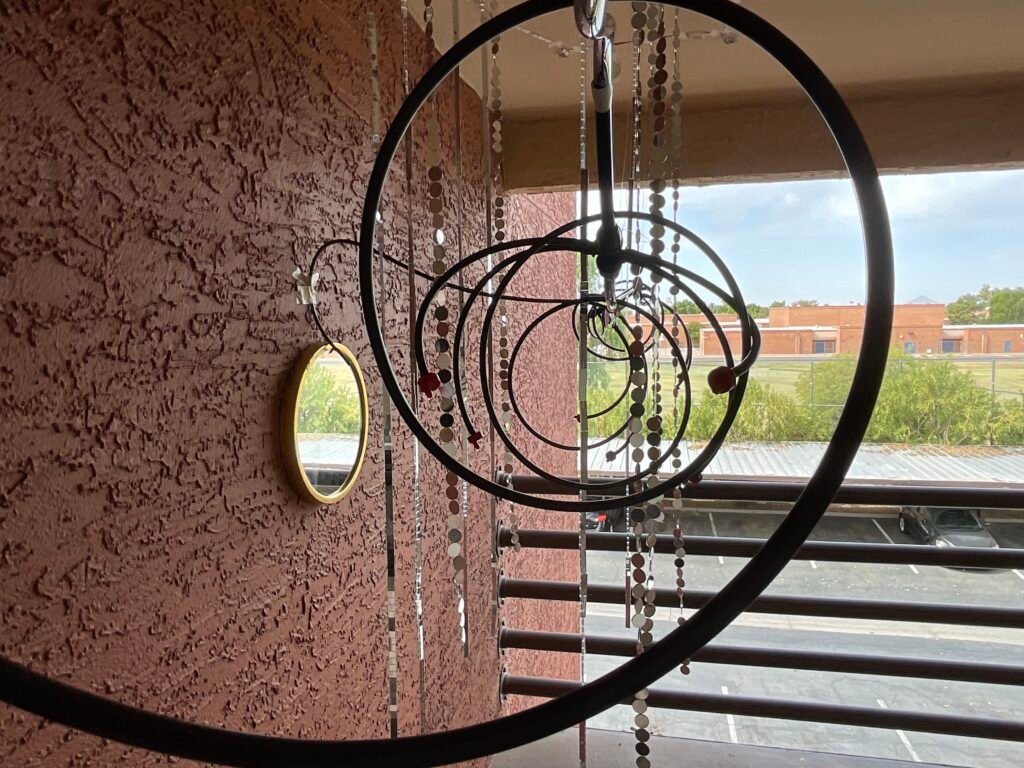
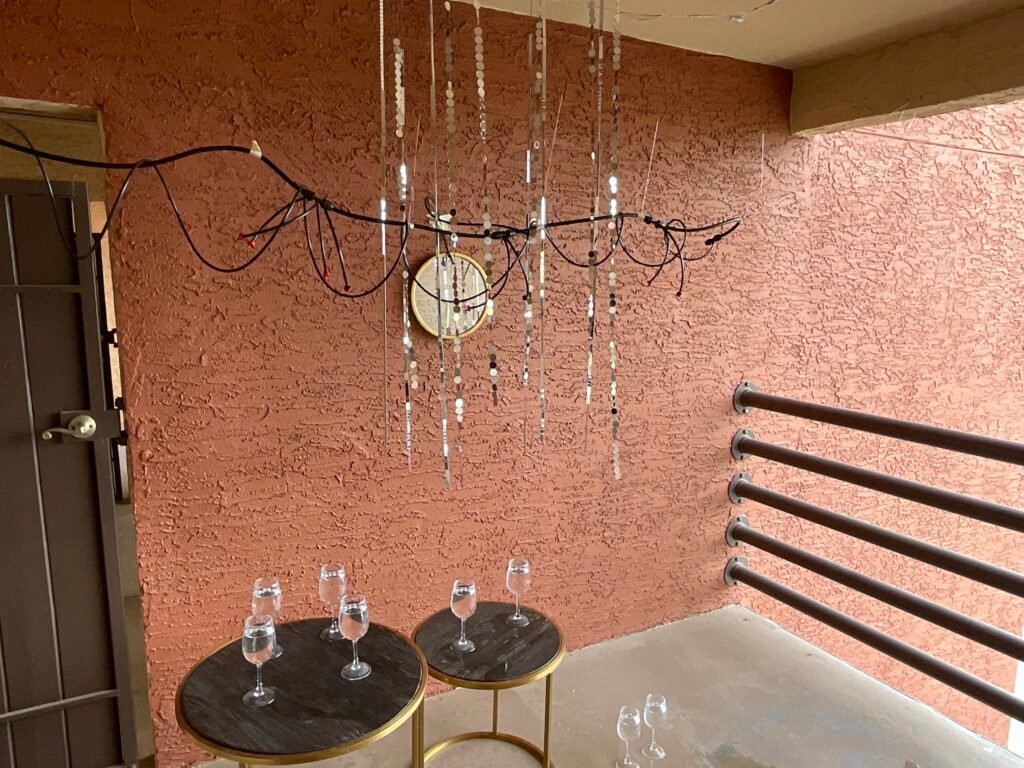
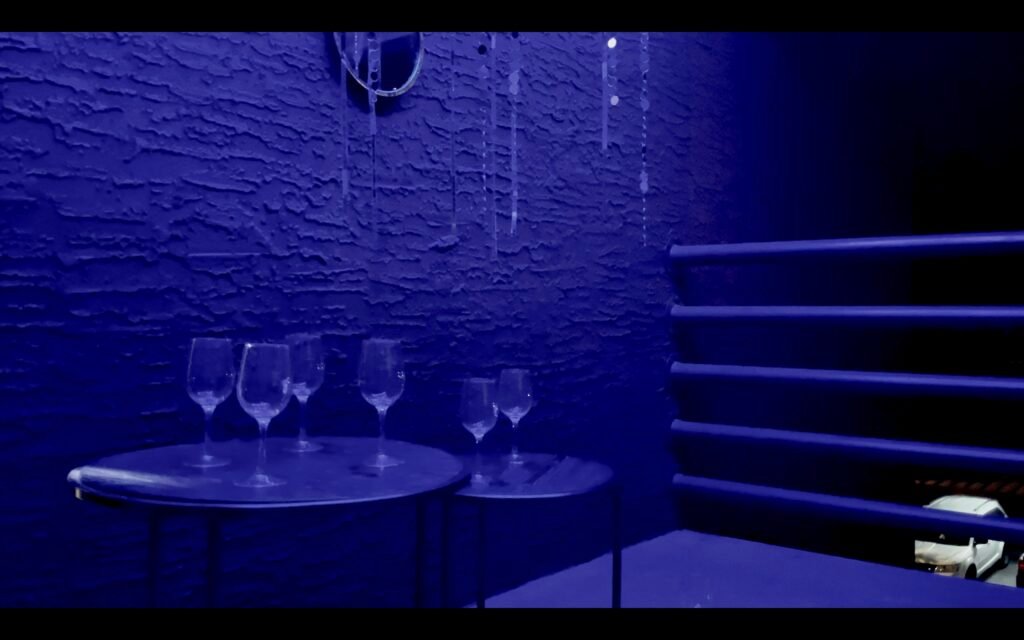
During testing, the impact of water on thin glass surfaces produced high-frequency transients that often resembled crackling, combustion, or electrical discharge rather than liquid flow. This perceptual ambiguity suggests that material resonance plays a significant role in shaping elemental associations in listening, and that the “sound of water” is not an inherent property of the liquid itself but an emergent phenomenon produced through its interaction with physical structures.
The hydrophone recordings revealed a parallel layer of infrastructural sound—mechanical pulses, low-frequency hums, and pressure fluctuations—highlighting the often-inaudible systems that enable seemingly simple natural processes. The juxtaposition of intimate glass resonance and distant mechanical activity foregrounded questions around agency, control, and the hidden architectures underlying domestic environments and regulated time.
These observations point toward future investigations into controlled excitation, vessel configuration, material modification, and multi-channel spatialization as means of further destabilizing perceptual expectations and examining sound as an embodied, relational phenomenon.